Research
My research integrates thermodynamic modeling, fieldwork, and laboratory study of rocks and minerals to solve problems in igneous and metamorphic petrology. My research at Caltech has focused on Martian mantle dynamics and secular changes in strongly peraluminous granites (i.e., S-type) and their metasedimentary source materials.
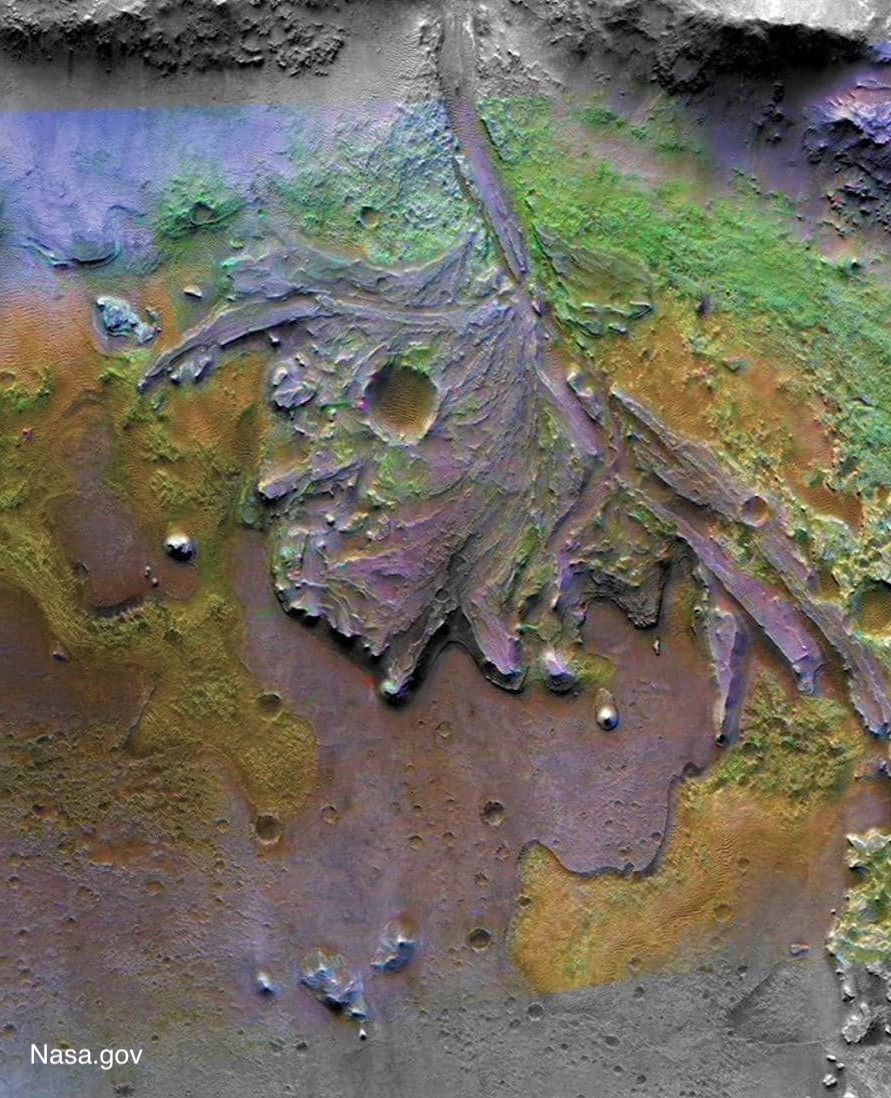
As a member of the PIXL team for the Mars 2020 mission, I have also been modeling the evolution of mafic and ultramafic rocks found in the Jezero Crater on Mars. New publications from the PIXL team are released frequently; please see my Google Scholar profile for more regular updates on this research.
Primary magmas
Caltech
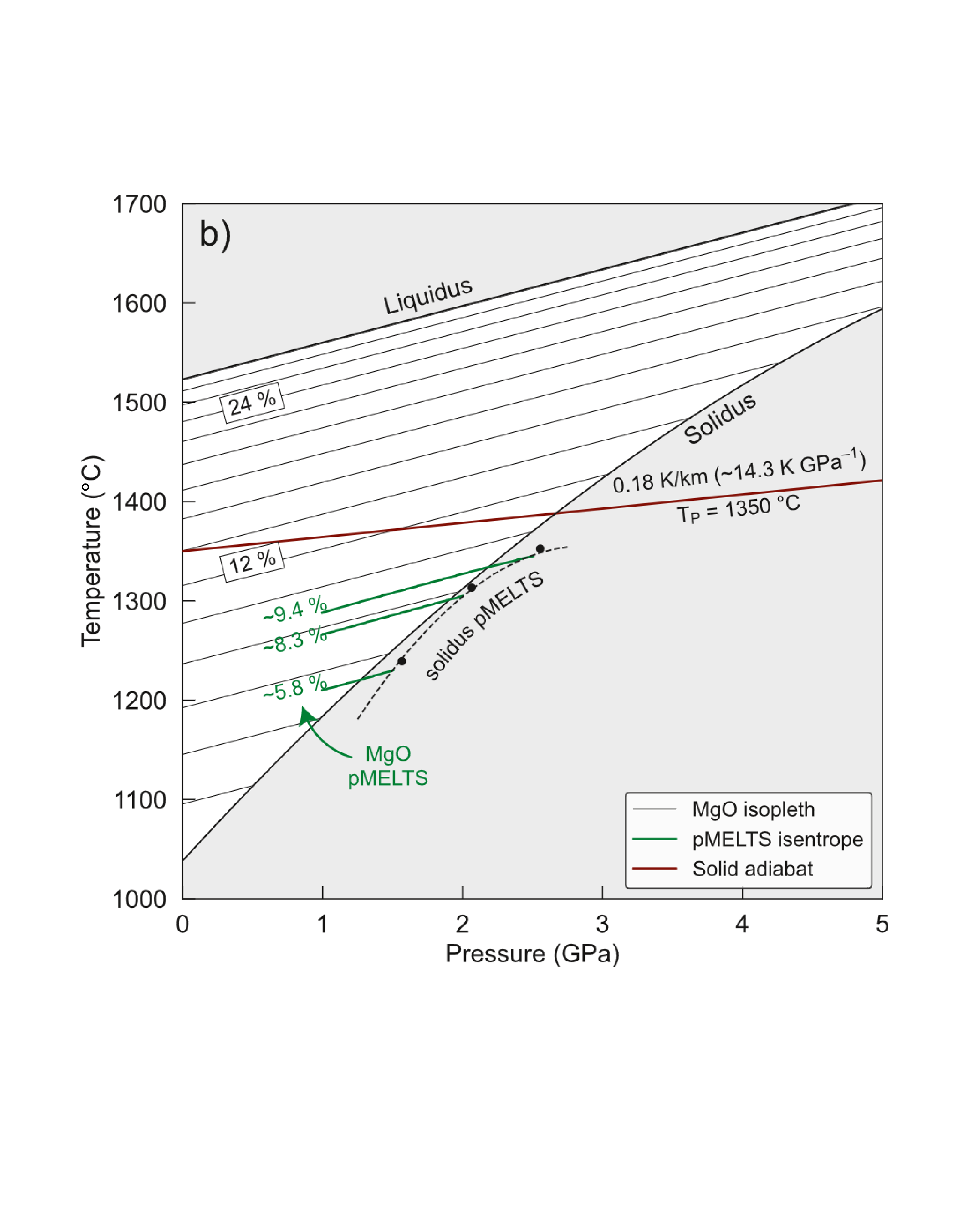
For my work with Prof. Asimow, I have been developing models to explore mantle melting conditions on Mars and the thermal and geodynamic evolution of the Martian mantle. I developed the software PRIMARSMELT to improve our understanding of the pressure and temperature conditions under which primary Martian magmas form. PRIMARSMELT combines a backward and forward modeling approach to calculate primary magmas and their formation conditions from compositional data of surface lavas or meteorites. Interestingly, when applying the PRIMARSMELT algorithm to meteorite data, the primary magma formation temperatures appear to have increased by approximately 100°C over the past 4 billion years - contrary to what we observe on Earth. This is likely due to a lack of plate tectonic activity on Mars, with its stagnant lid regime preventing heat loss. I also assisted in creating the software for PRIMELT3-P, which uses a similar approach to estimate primary magma compositions and formation conditions for basalts on Earth.
Jezero Crater
Jet Propulsion Laboratory
Mars 2020: PIXL Team
I joined the PIXL team of the Mars 2020 Mission in 2021. PIXL (or the Planetary Instrument for X-RAY Lithochemistry) is an X-ray fluorescence spectrometer attached to the Perseverance that measures the composition of rocks on the Martian surface as the rover moves. As part of the team, I have been studying the igneous rocks on the surface of Mars with data from PIXL and creating models to investigate their formation.
Secular changes in strongly peraluminous granites
Caltech
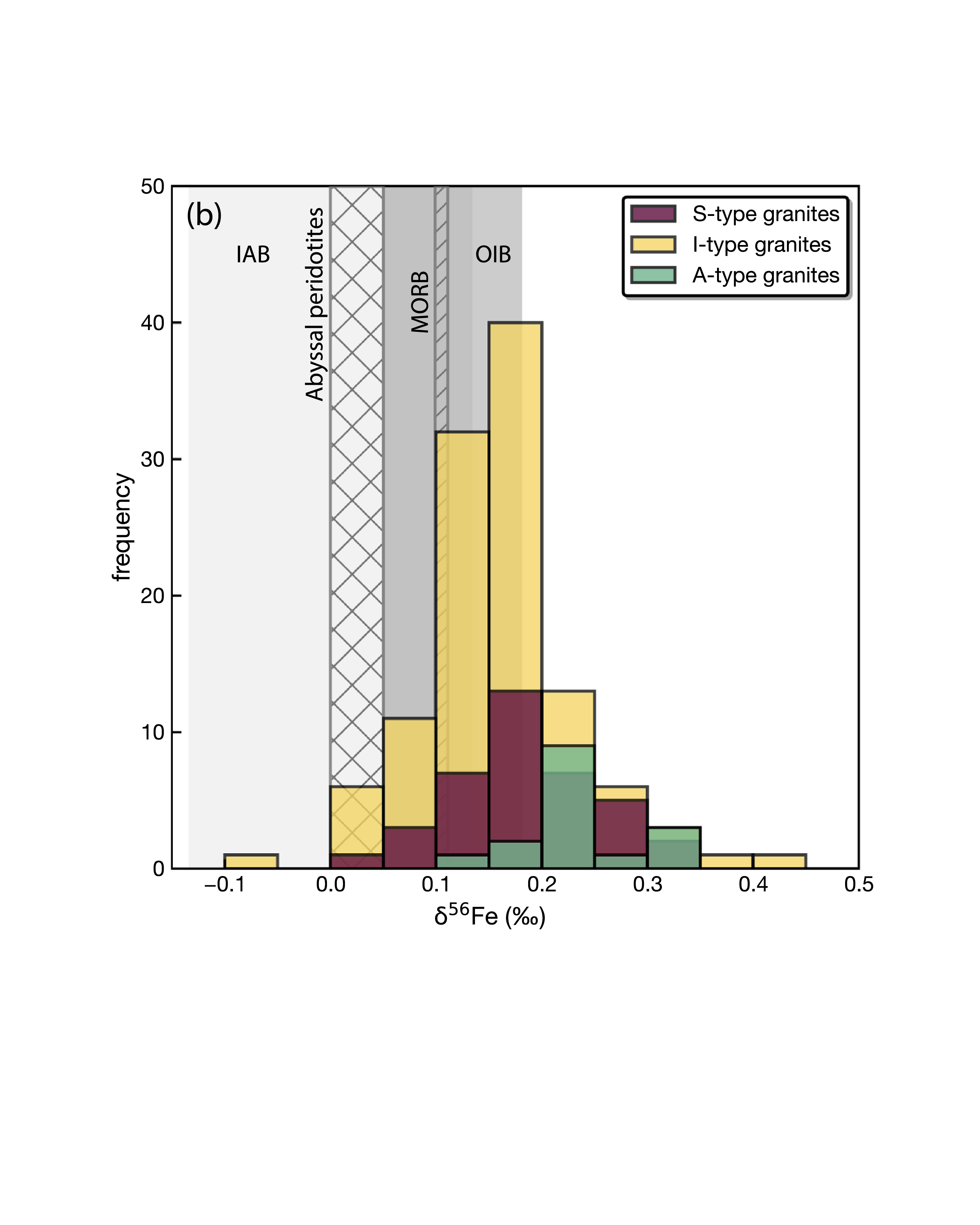
Strongly peraluminous granites, often referred to as S-type granites, are formed when metasedimentary rocks are partially melted and are often found in Archean greenstone belts. Being derived from sedimentary sources, SPGs may chronicle important information on the relative contributions of crustal vs. mantle-derived material to sedimentary basins and secular changes in surface conditions. With Prof. Bucholz, I have explored changes in iron and oxygen isotope ratios in SPGs through geologic time. Our work shows that oxygen isotope ratios in SPGs chronicle 1) the progressive contamination of the mantle via subduction of sediments and 2) the bulk iron isotope evolution of siliciclastic sediments across the Archaean-Proterozoic boundary.
Deep crustal processes
Caltech
I have worked on multiple projects exploring deep crustal igneous and metamorphic processes through a modeling and laboratory-based perspective. With Prof. Richard Palin (Oxford) and colleagues, I collaberated on projects investigating garnet stability during anatexis and the metamorphic evolution of the Wet Mountains in Southern Colorado through thermobarometry and thermodynamic modeling. Through collaboration with Dr. Emma Sosa (Caltech), I have explored the evolution of the Aleutian and Andean lower crust through Fe isotope analysis of volcanically sourced xenoliths.
Adakite formation
colorado school of mines Universidad Nacional de Colombia
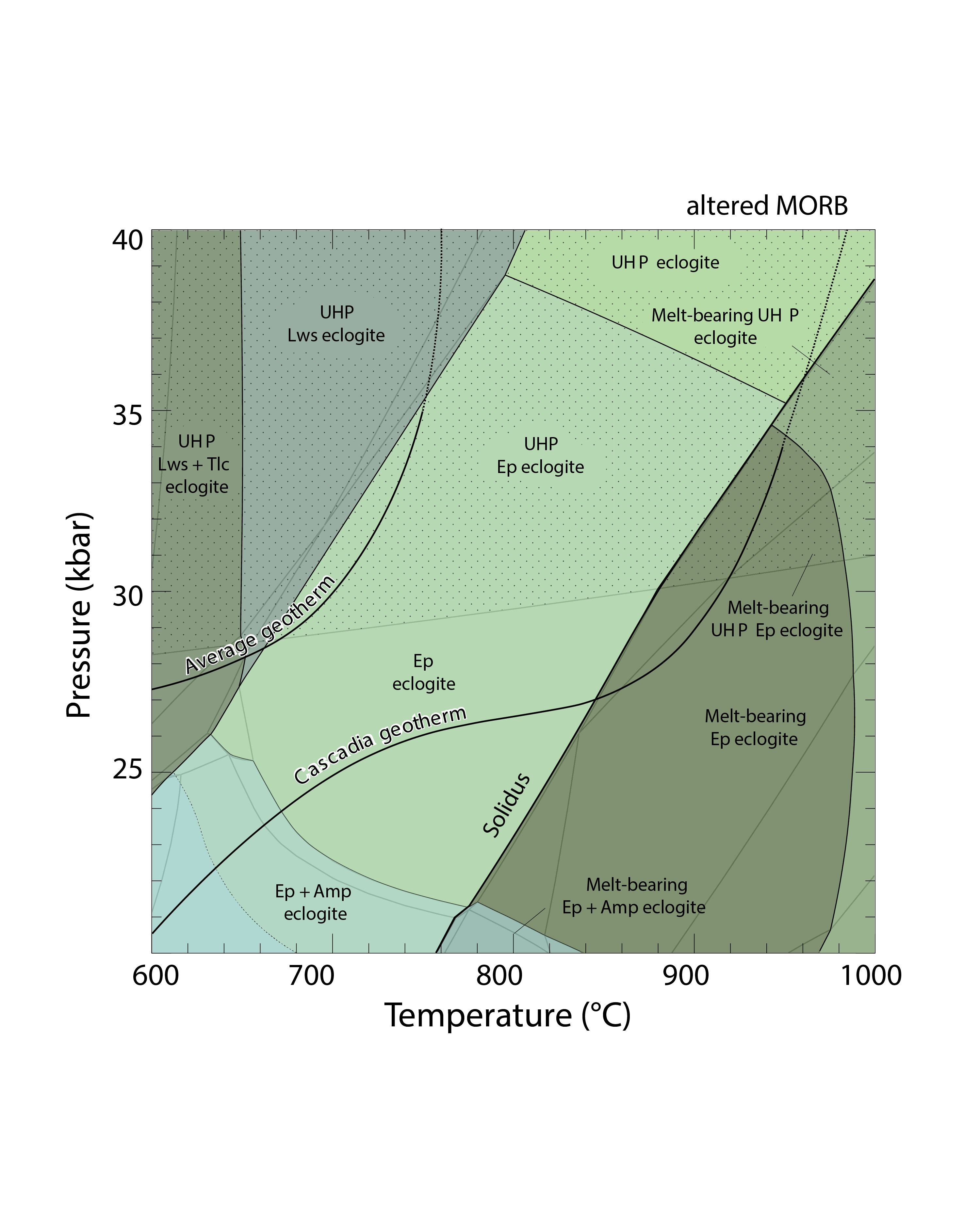
Adakite is a rare class of magma characterized by fractionate rare earth element patterns and high silica and sodium content features attributed to equilibrium with a garnet-bearing residue. While these characteristics are consistent with adakites forming through partial melting of subducted oceanic crust, debate exists regarding the likelihood of this occurring in modern-day arc environments. Together, my colleagues Richard Palin (now at Oxford), David Hernández-Uribe (now at University of Illinois Chicago), and I explored the probability of subducted crusts melting through phase equilibrium modeling. We showed that subducted crust should only melt in the hottest subduction zones. Hydrothermally altered basalt, rather than pristine MORB, also represents a more fertile source material for partial melting in arc settings.
Formation of Archean tonalite-trondhjemite-granodiorite (TTG) terranes
colorado school of mines Universidad Nacional de Colombia
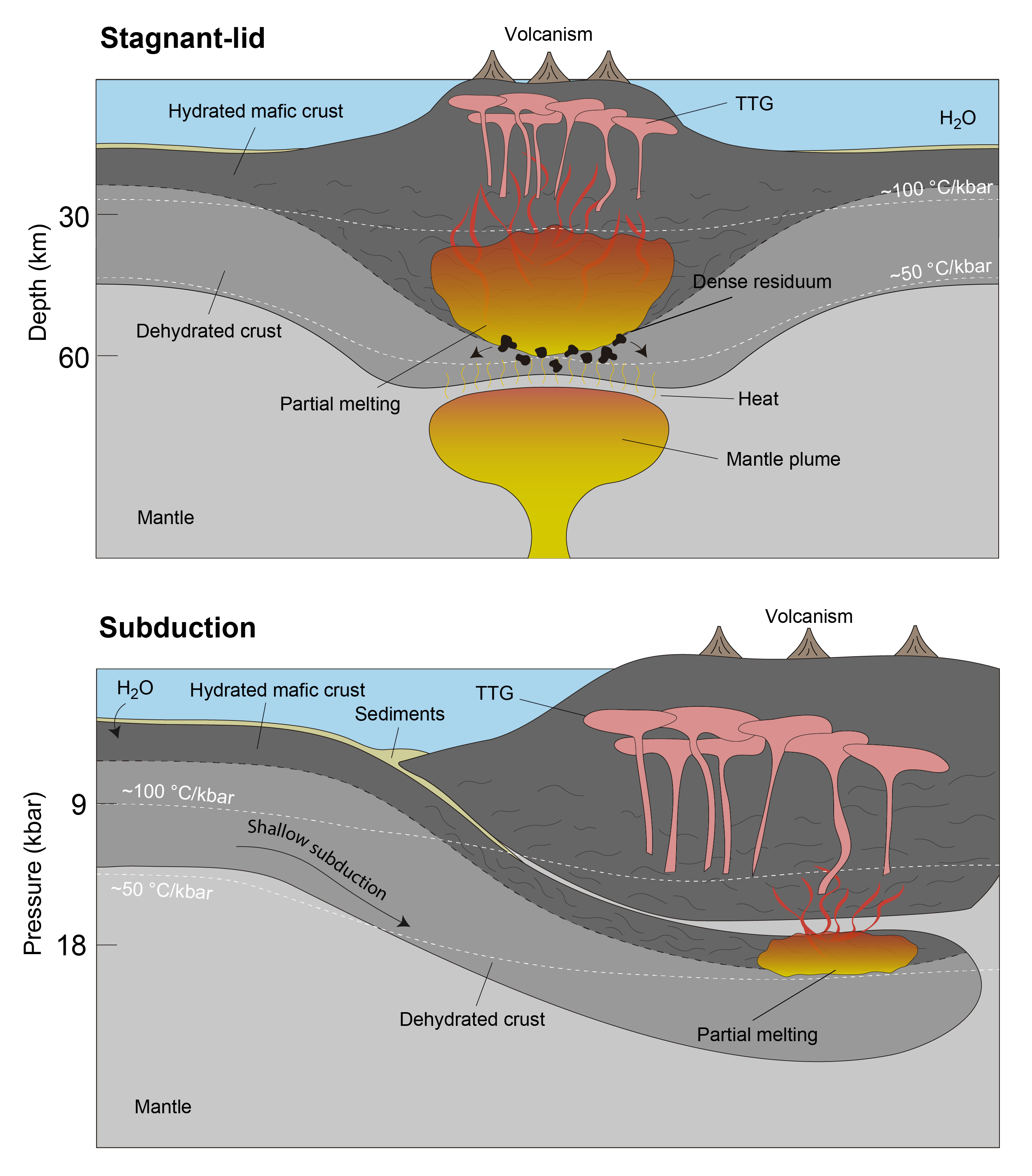
Tonalite–trondhjemite–granodiorite (TTG) terranes are Archean (~4.0–2.5 Ga) crustal bodies formed through partial melting of hydrated basaltic crust. It is uncertain whether TTGs formed in environments similar to modern-day subduction zones or in a stagnant-lid tectonic regime and how TTG magmas separated from their source regions and acquired distinctive geochemical characteristics once formed. For my Master's thesis, I showed through petrological modeling that hydrous Archean basaltic crust metamorphosed in a stagnant-lid regime produces individual pulses of TTG-like magmas. The full compositional range of TTG magmas can be produced through co-mingling of these discrete pulses during their ascent through the overlying Archean crust. Importantly, these results present a way to generate the full range of observed TTG bodies without subduction.
Differentiation in migmatite bodies
Purdue
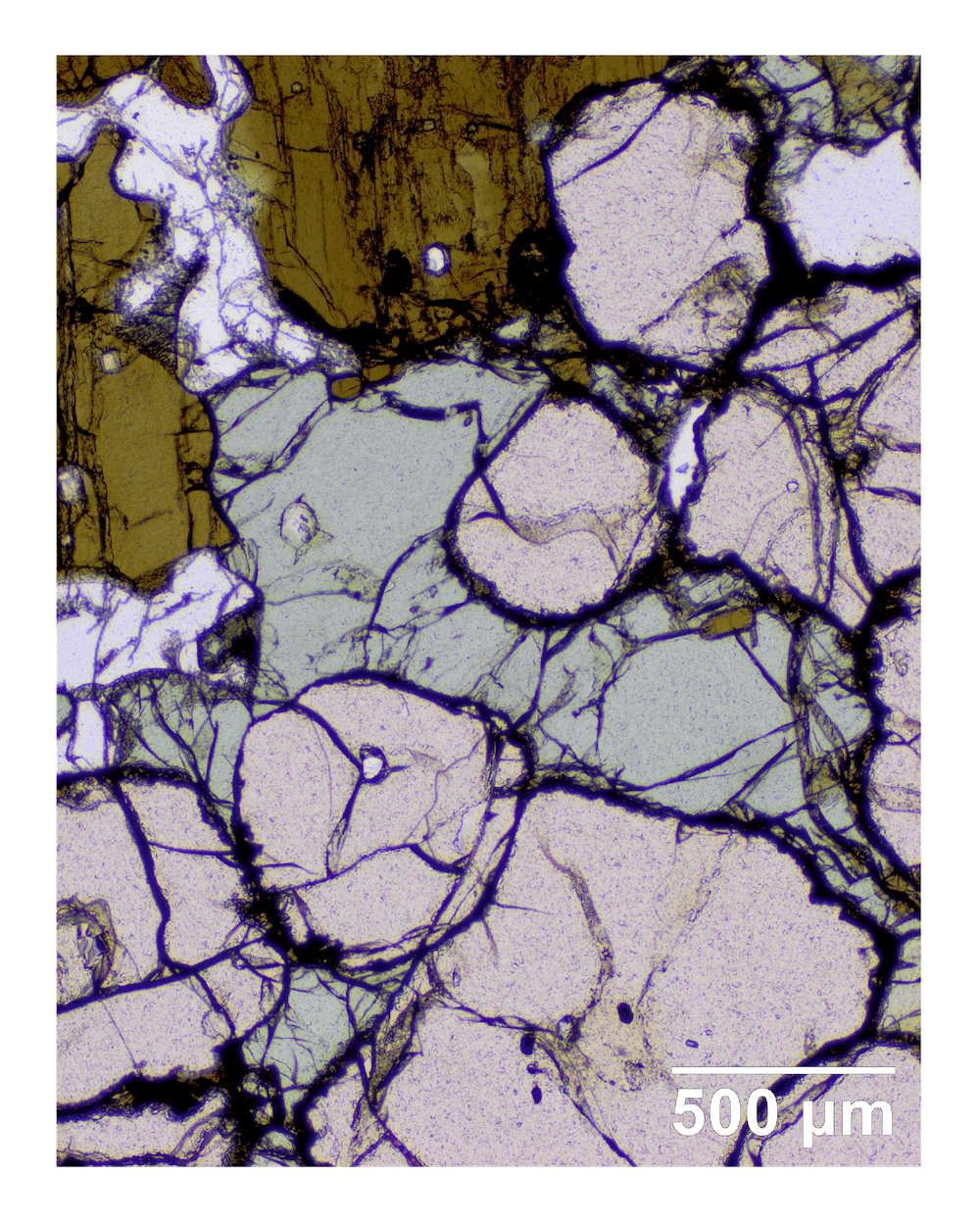
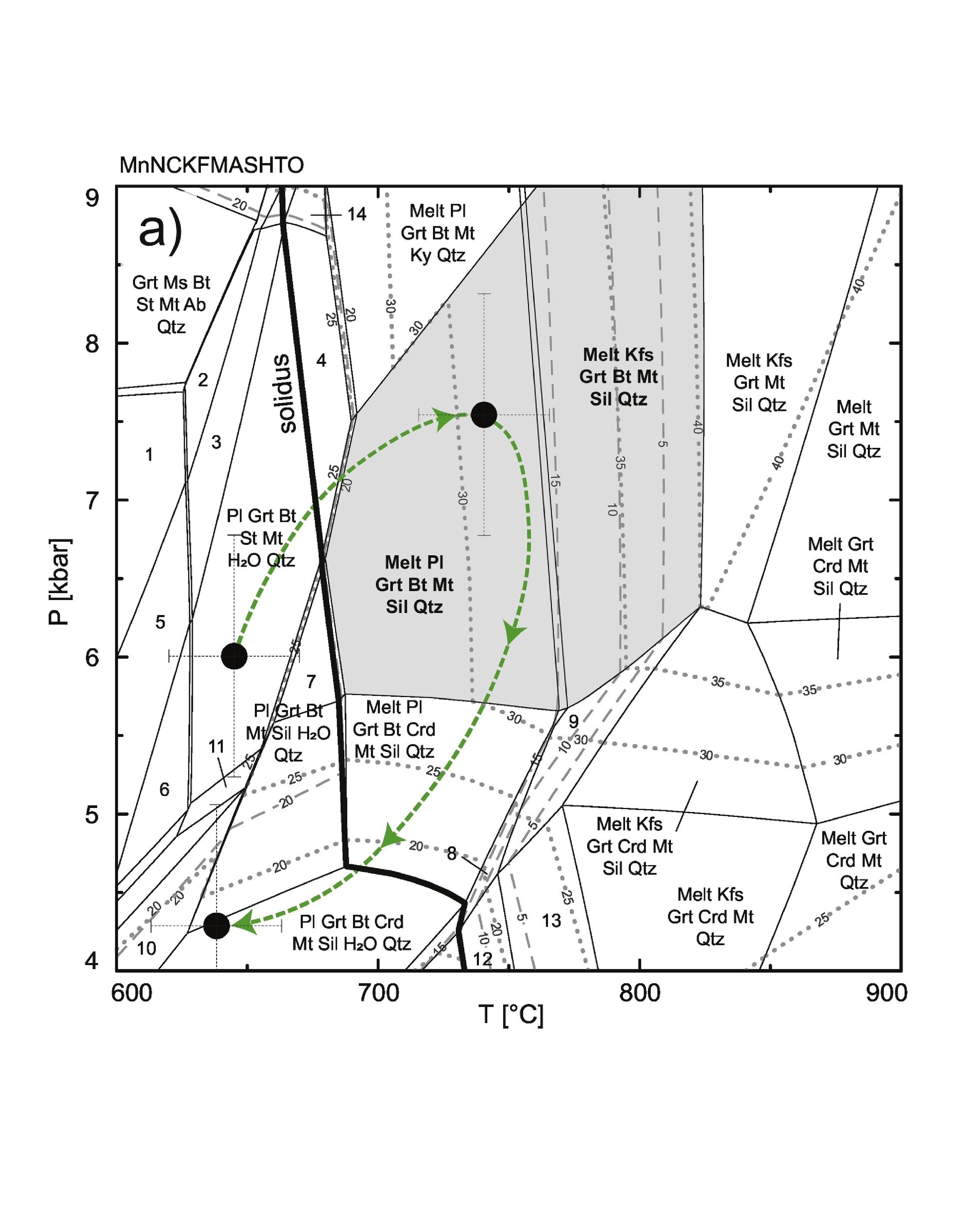
As a visiting scholar at Perdue University, I studied the geochemistry and petrography of two neighboring migmatite bodies from the Wet Mountains in Colorado. Despite their proximity in the field, one migmatite comprised garnet and biotite, while the other contained a higher-temperature assemblage of garnet, sillimanite, and cordierite. Through the thermodynamic modal, I showed that these differences in mineralogy likely reflect differences in the melt extraction and retention rates. Efficient melt extraction allowed the peak metamorphic assemblage to be preserved in the garnet-sillimanite-cordierite migmatite. In contrast, melt-retention and back-reaction between residual minerals and the melt resulted in retrograde metamorphism in the garnet-biotite migmatite.